2 min read
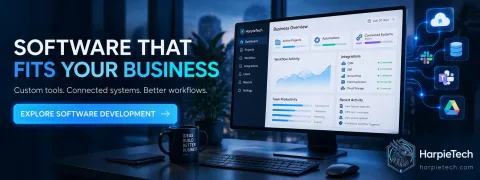
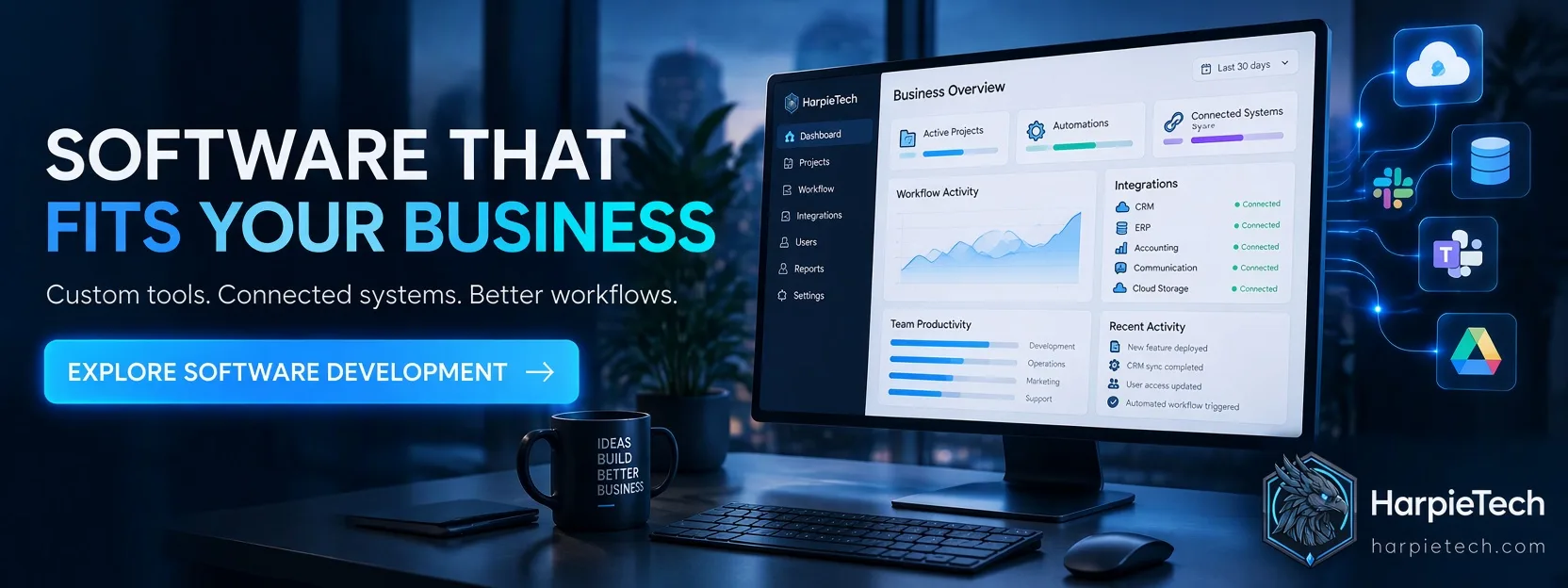
Custom software is built around your business processes instead of forcing your team to work around generic tools. Learn what it includes and when it makes sense.
What is custom software development?
Custom software development is the process of designing and building digital tools for a particular business or workflow. It can include web applications, customer portals, internal dashboards, back-office tools, APIs and integrations between systems. Rather than adapting every process to off-the-shelf software, a custom solution is shaped around the way the business actually works.
Why do businesses need custom software?
Ready-made tools can work well at first. Over time, a business may rely on spreadsheets, multiple plugins or disconnected platforms. The same information gets entered more than once, teams create manual workarounds and important data becomes difficult to trust. Custom software may be useful when those limits start slowing the business down.
A tailored application can help to:
- Fit real workflows. Design features around how employees and customers need to use the system.
- Connect existing tools. Use APIs and integrations to exchange information between systems.
- Reduce repetitive work. Replace selected manual steps with consistent digital processes.
- Improve visibility. Bring relevant information into dashboards or customer portals.
- Support future changes. Build a foundation that can be maintained and extended as requirements evolve.
What makes a good software project?
Start with the business problem, not a long feature list. Define who will use the software, what they need to accomplish and how success will be measured. Prioritize the smallest useful scope, agree on milestones and test early versions with the people who will use them. This makes it easier to uncover misunderstandings before they become expensive changes.
Quality also depends on the work behind the interface. Automated tests can catch regressions, documentation helps others understand the system, and sensible access controls protect information. Code ownership should be clear, with the project stored in a repository the client can access and a handover that explains how to run and maintain it.
Build for use, maintenance and growth
A system is not finished just because the first version works. It needs updates, monitoring, fixes and a clear plan for future changes. Choosing proven technology, documenting important decisions and agreeing on how support will work can reduce the risk of the software becoming difficult to maintain.
When is custom development worth considering?
Consider it when existing tools no longer fit your process, different systems do not exchange data reliably, a customer or employee portal is needed, or manual work is creating avoidable delays. HarpieTech builds web applications, portals, dashboards, APIs and integrations, and includes automated testing, documentation, code in your own repository, handover and team training. Project scope and price are agreed before work begins, with working progress shared regularly.
The right solution is not necessarily the largest one. It is the smallest reliable system that solves the actual problem and can be maintained as the business changes.
Explore HarpieTech's custom software development: HarpieTech software development
More about HarpieTech: harpietech.com